
Every vehicle owner eventually faces a familiar crossroads when a dashboard warning light flickers on or an unexpected noise echoes from beneath the hood. Should you pull into a convenient neighborhood garage that handles everything under one roof, or seek out a dedicated facility focused exclusively on a single automotive system or manufacturer? Modern vehicles combine intricate onboard computers, lightweight structural alloys, and tight engineering tolerances that make choosing the right repair partner more consequential than ever. Selecting the wrong facility can lead to misdiagnosed problems, voided warranty claims, or inflated labor bills, while matching the right issue to the right team saves time and money. This guide breaks down how general repair centers and niche facilities operate, offering a practical, step-by-step framework to help you protect your vehicle’s performance, safety, and resale value across every stage of ownership.
Understanding the Automotive Repair Landscape
Audit Your Vehicle’s Routine Service Needs Before Choosing a Garage
Keeping a vehicle reliable starts with a predictable, well-documented care schedule. For everyday tasks like oil changes, brake pad replacements, battery swaps, and multi-point fluid inspections, partnering with a trusted local auto mechanic offers unmatched convenience and personal accountability. General repair shops thrive on high-frequency upkeep because their technicians see dozens of makes and models every week, giving them broad familiarity with common wear-and-tear patterns. Establishing a long-term relationship at one dependable shop ensures your service records stay consolidated, making it easier to spot gradual component degradation before small issues escalate into roadside breakdowns.
- Track factory mileage intervals: Follow your owner’s manual rather than generic sticker reminders to prevent premature part replacements.
- Verify parts quality: Ask whether the shop installs original equipment manufacturer components or reputable aftermarket equivalents during routine auto maintenance visits.
- Request digital inspection reports: Choose facilities that send photos and technician notes directly to your phone before approving extra work.
- Confirm warranty protection: Keep itemized invoices showing part numbers and fluid grades to safeguard your factory powertrain coverage.
Match Complex Powertrain Symptoms to Dedicated Diagnostic Facilities

When your vehicle exhibits severe drivability symptoms—such as delayed gear engagement, slipping RPMs during acceleration, persistent misfires, or metallic knocking—a general bay may lack the specialized tooling required for an accurate internal diagnosis. Dedicated transmission repair centers invest in proprietary dynamometers, hydraulic valve-body testing rigs, and dust-free rebuild rooms designed specifically for complex gearboxes. Similarly, facilities specializing in car engine repair utilize borescopes, ultrasonic leak detectors, and precision machining equipment to pinpoint internal wear—such as stretched timing chains, scored cylinder walls, or failing head gaskets—without resorting to expensive trial-and-error part swapping.
- Look for dedicated teardown bays: Complex internal overhauls require isolated workspaces to prevent dirt and debris from contaminating precision bearings and seals.
- Compare rebuild versus replacement options: Ask specialists to quote both a custom internal rebuild and a remanufactured crate assembly with nationwide warranty coverage.
- Inquire about diagnostic fees: Paying an upfront testing fee at a niche facility often costs less than replacing undamaged sensors at a generalist garage.
- Check technician certifications: Verify that lead builders hold system-specific credentials for automatic gearboxes, manual drivetrains, or engine machinist work.
Navigating Make-Specific and European Engineering
Verify Brand-Specific Software and Tooling for German Vehicles
European automobiles rely heavily on integrated control modules that communicate over high-speed fiber-optic and CAN-bus networks, meaning generic OBD-II code readers often miss underlying fault data. If you drive a German nameplate, booking appointments at an independent facility equipped for volkswagen service ensures technicians have access to factory-grade diagnostic software like ODIS or VCDS, which is essential for calibrating dual-clutch gearboxes and reading manufacturer-specific technical bulletins. Likewise, shops focusing on bmw repairs utilize proprietary ISTA platforms to register new batteries, program replacement modules, and monitor variable valve-timing systems that general garages frequently misinterpret.
- Ask about factory scan tools: Confirm the shop uses brand-specific diagnostic computers rather than universal handheld tablets before scheduling an appointment.
- Inspect fluid specifications: German powertrains demand strict synthetic oil viscosities and specialized coolants that prevent premature gasket and seal deterioration.
- Prioritize preventative cooling checks: European engines run at higher operating temperatures, making regular inspections of water pumps, thermostats, and expansion tanks critical.
- Compare dealership versus independent labor rates: Brand-focused independent shops typically offer identical factory tooling at twenty to thirty percent lower hourly rates.
Know When to Separate Wheel Care from General Mechanical Work
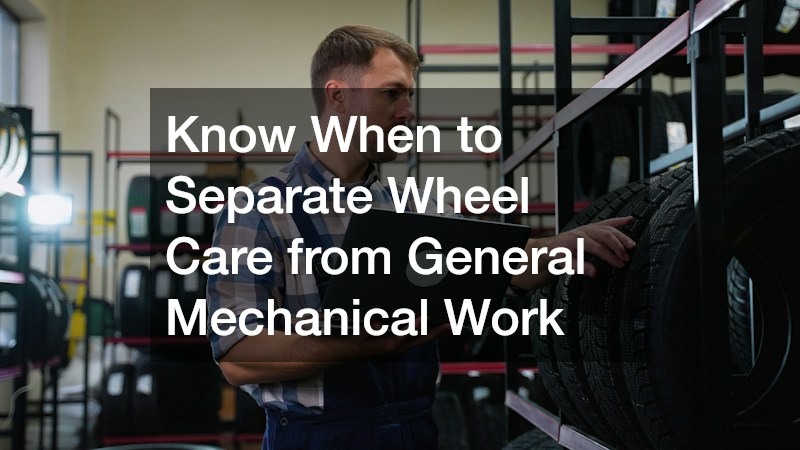
Tires and suspension geometry govern braking distance, wet-weather traction, and fuel efficiency, yet wheel care is frequently treated as an afterthought during standard mechanical visits. Visiting a dedicated local tire service gives you access to road-force balancing machines and four-wheel laser alignment racks that detect subtle rim bends or tire sidewall stiff spots that standard spin balancers miss. Because uneven tread wear often stems from worn control arm bushings, bent tie rods, or improper camber angles, specialists who focus exclusively on rubber and chassis geometry can diagnose handling pulls faster and preserve the lifespan of expensive all-season or winter sets.
- Schedule seasonal tread inspections: Check tread depth across the inner, center, and outer ribs every five thousand miles to catch alignment drift early.
- Request road-force balancing: Insist on load-roller balancing if you feel steering wheel vibrations above sixty miles per hour.
- Verify TPMS sensor programming: Ensure technicians replace rubber valve stems and relearn tire pressure monitoring sensors whenever mounting new rubber.
- Align after suspension work or potholes: Always book a four-wheel alignment immediately after replacing struts, ball joints, or striking deep road hazards.
Handling Exterior, Structural, and Glass Damage
Separate Cosmetic Paintwork from Structural Frame Restoration
Mechanical repair and structural body restoration are completely separate trades requiring distinct certifications, equipment, and workspace environments. For minor parking lot scuffs, hail dents, or bumper scratches, a reputable auto body shop can perform paintless dent repair and computerized color-matching to restore your vehicle’s finish without disturbing factory panels. However, following a major highway impact, certified collision repair shops become essential because modern unibody frames utilize ultra-high-strength steel and structural aluminum that require laser frame-measuring racks, pulse MIG welders, and strict manufacturer sectioning guidelines to preserve crash energy absorption zones.
- Exercise your legal right to choose: Insurance companies may recommend preferred facilities, but you retain the legal right to select your own repair shop.
- Verify OEM repair procedures: Ask estimators whether they pull manufacturer structural blueprints before cutting or welding damaged frame rails.
- Inspect paint-booth filtration: Clean downdraft paint booths prevent dust nibs and ensure clear-coat durability matches factory standards.
- Confirm post-repair safety scans: Require pre- and post-repair electronic diagnostic scans to verify that airbag sensors and seatbelt pretensioners function properly.
Insist on ADAS Recalibration After Windshield Replacements
Modern windshields are structural safety components that support roof rigidity during rollovers and house forward-facing cameras, rain sensors, and LiDAR modules for driver-assistance features. When a rock chip spreads across your line of sight, selecting certified auto glass services ensures technicians use high-modulus urethane adhesives with verified safe drive-away times rather than generic sealants. More importantly, replacing a windshield shifts the mounting angle of lane-keeping and automatic emergency braking cameras by fractions of a millimeter, requiring static target boards or dynamic road-test recalibrations so your safety systems interpret road markings accurately.
- Repair small chips immediately: Addressing bullseye cracks smaller than a quarter prevents temperature swings from spreading damage across the entire pane.
- Specify acoustic or solar glass: Request replacement glass that matches your vehicle’s original sound-dampening interlayers and heads-up display coatings.
- Demand calibration documentation: Ask for a printed confirmation sheet proving your forward-facing cameras passed static or dynamic recalibration tests.
- Respect adhesive curing windows: Follow technician instructions regarding tape removal, car washes, and door-slamming pressure for the first twenty-four hours.
Cost, Warranty, and Convenience Trade-Offs

Compare Flat-Rate Labor Hours and Diagnostic Fee Structures
Understanding how repair facilities calculate labor charges prevents sticker shock when reviewing an estimate. Most general repair centers and niche specialists rely on industry flat-rate labor guides, which assign a standardized number of hours to every task regardless of how quickly an experienced technician finishes the job. While one-stop shops often advertise lower base hourly labor rates and bundle multi-service discounts, specialists frequently complete intricate repairs faster and with fewer comebacks because they perform the exact same procedure daily. Paying a transparent diagnostic fee upfront buys dedicated testing time, protecting you from shops that guess at causes and bill you for unnecessary components.
- Request itemized written estimates: Ensure every quote separates parts pricing, labor hours, hazardous waste disposal fees, and applicable sales taxes.
- Ask about diagnostic fee credits: Many facilities apply the initial testing charge toward the final repair bill once you approve the recommended work.
- Compare parts markup policies: Clarify whether the shop charges full manufacturer list price on components or passes along commercial fleet discounts.
- Watch for overlapping labor charges: When replacing adjacent parts—such as a timing belt and water pump—confirm that shared teardown labor is billed only once.
Protect New-Car and Extended Warranties Without Overpaying
A persistent myth among drivers is that visiting an independent facility automatically voids a new-car factory warranty. Under federal consumer protection laws, manufacturers cannot deny warranty coverage simply because you chose an independent garage, provided the work was performed correctly using parts and fluids that meet factory specifications. However, if a component fails due to improper installation or substandard fluids, the repair shop—not the automaker—bears responsibility. Evaluating warranty terms across shop types helps you balance nationwide roadside protection from major chains against long-term workmanship guarantees offered by dedicated independent specialists.
- Save every digital and paper receipt: Maintain a chronological folder containing dates, mileage readings, part numbers, and fluid viscosity certifications.
- Understand third-party extended contracts: If you hold an aftermarket service contract, verify whether the shop accepts direct insurer payments before authorizing teardown.
- Compare workmanship guarantees: Look for shops offering at least a twenty-four-month or twenty-four-thousand-mile warranty on both parts and labor.
- Reserve recall work for dealerships: Safety recalls and factory technical campaigns are always performed free of charge at authorized franchise dealerships.
Building Your Hybrid Vehicle Care Strategy
Create a Two-Tiered Repair Contact List Before an Emergency Hits
Making sound repair decisions becomes nearly impossible when you are stranded on the shoulder of a highway or rushing to get your car back before a Monday commute. The smartest approach is to build a vetted, two-tiered contact list while your vehicle is running smoothly. Start by selecting one reliable generalist shop within ten minutes of your home or office for routine upkeep, then identify two or three dedicated specialists for complex mechanical, electrical, or exterior needs. Storing these contacts in your phone and glovebox eliminates panic-driven towing decisions and ensures your car goes straight to the right bay on the first try.
- Read recent, detailed customer reviews: Look for feedback mentioning transparent communication, accurate estimates, and fair handling of unexpected complications.
- Visit the shop in person first: Clean, organized service bays and attentive service advisors typically reflect disciplined technical workmanship.
- Verify local towing partnerships: Ask your preferred facilities which flatbed towing companies they recommend for safe, damage-free transport.
- Test communication with a minor service: Book a simple fluid change or inspection first to evaluate how clearly the team explains findings.
Use the “Symptom-to-Specialist” Decision Matrix for Every Visit

Whenever an issue arises, pause for two minutes to categorize the problem before picking up the phone. Ask yourself whether the need involves predictable wear, an isolated vehicle subsystem, manufacturer-specific electronics, or exterior structural integrity. Routine fluids, filters, belts, and standard brake jobs belong with your primary generalist, where convenience and consolidated service history deliver the highest return. Conversely, whenever a problem involves internal drivetrain internals, brand-locked computer modules, precision wheel alignment, or post-collision safety sensors, routing your vehicle directly to a dedicated specialist saves diagnostic time and prevents costly rework.
- Route routine intervals to generalists: Bundle oil changes, wiper blades, cabin filters, and standard brake pads into single efficient visits.
- Escalate persistent warning lights: If a check-engine or drivetrain alert returns after an initial reset, move immediately to a system or brand specialist.
- Prioritize safety-critical calibrations: Never skip specialized alignment or sensor calibration steps after suspension, glass, or bodywork repairs.
- Review your service log annually: Audit your past twelve months of receipts every autumn to plan upcoming preventative replacements ahead of winter weather.
Choosing between a one-stop garage and a dedicated specialist is rarely an all-or-nothing decision. Modern vehicles reward owners who match each task to the facility best equipped to handle it efficiently and accurately. By relying on a trusted generalist for predictable scheduled upkeep while reserving complex powertrain diagnostics, brand-specific electronics, wheel geometry, and post-accident structural work for dedicated experts, you capture the best of both worlds: everyday convenience paired with deep technical precision. Taking the time today to vet local facilities, verify diagnostic capabilities, and organize your service records turns unexpected automotive hiccups into manageable, stress-free decisions. Audit your vehicle’s maintenance history this week, fill any gaps in your go-to repair network, and drive with confidence knowing your car is in capable hands no matter what the road ahead brings.
