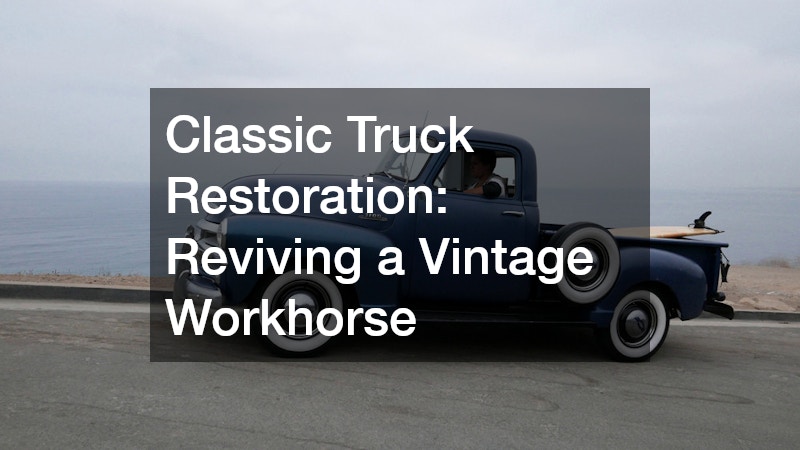
There is something deeply compelling about a vintage pickup truck sitting in a field or garage, worn down but not beaten. Restoring one of these trucks is not a weekend hobby; it is a full-scale commitment to mechanical problem-solving, sourcing obscure parts, and making hundreds of judgment calls that will define the character of the finished vehicle. Whether you’re chasing a frame-off show build or a reliable daily driver with period-correct aesthetics, the path forward demands both a clear plan and a willingness to adapt when the project reveals its hidden complications.
Assessing the Frame and Setting a Realistic Budget

Before you spend a single dollar on parts, you need to know exactly what you’re working with. The most expensive mistake in any restoration is getting emotionally attached to a truck before performing a thorough structural inspection. Pull the cab, strip the bed, and get the frame on jackstands where you can examine every inch of rail, crossmember, and mount point under good lighting.
When assessing the frame, check for these specific problem areas:
- Crossmember rot near the transmission and body mounts, where moisture collects inside the channel
- Frame rail cracks around the rear spring hangers, common on trucks that hauled heavy loads for years
- Previous weld repairs that may have been done with improper technique or filler material
- Boxed vs. C-channel sections, and whether any flanges have separated or corroded through
Once you have a complete picture of the structural condition, you can build a realistic budget. The frame is the foundation, and sound auto repair practices begin here. Grinding out surface rust, treating the metal, and plating any compromised sections is far less expensive at this stage than discovering problems after the bodywork is done. If the frame is beyond saving, a quality replacement or a professionally straightened unit is always a better foundation than a compromised original.
Budget planning should account for three categories: known costs, estimated costs, and a contingency reserve of at least 20 percent. Restorations almost always surface surprises, and having financial flexibility keeps the project moving forward rather than stalling on the shop floor for months.
Rebuilding the Fuel and Cooling Systems
Old fuel systems on vintage trucks are among the most neglected and dangerous components you will encounter. Decades of sitting allow varnish to build up inside tanks, gum up carburetors, and clog steel fuel lines that are already prone to interior corrosion. A thorough fuel delivery overhaul is not optional; it is a prerequisite to safe and reliable operation.
A complete fuel system rebuild typically involves:
- Removing and cleaning or replacing the fuel tank, including the sending unit and pickup tube
- Replacing all steel and rubber fuel lines from the tank forward
- Rebuilding or replacing the mechanical fuel pump
- Cleaning and rebuilding the carburetor with all new jets, gaskets, and needle valves
- Installing an inline fuel filter as a final safeguard between the pump and the carb
Many restorers of older trucks also address the cooling system at the same stage, since both systems directly affect drivability and both tend to fail together after years of neglect. Flushing the block, rodding out the radiator, replacing the water pump, and installing a new thermostat are all straightforward jobs that pay significant dividends on the road.
Protecting the Bed for Real-World Use
The truck bed tells the story of a vehicle’s working life, and how you choose to restore or protect it depends heavily on what you plan to do with the truck once it’s back on the road. A show-quality restoration calls for bare metal prep, epoxy primer, and a high-gloss topcoat matched to the original color. But if you intend to actually use the truck, investing in a high-quality truck bed liner makes far more practical sense.
Spray-on liners provide a permanent, moisture-resistant surface that bonds to the metal and eliminates the gaps and edges where rust typically starts. They also add a modest layer of impact protection that preserves the bed floor when hauling equipment, lumber, or supplies. Rolled and brushed-on products are a budget-friendly alternative that can be applied at home with proper surface preparation, though they don’t bond as aggressively and may peel over time if moisture gets underneath.
If you choose a liner, apply it after all welding, metalwork, and priming are complete, but before any final color coats go on the cab or exterior panels. This sequencing prevents overspray contamination and gives you the cleanest possible separation between the bed finish and the painted bodywork.
Covering and Securing the Bed

Beyond the liner, adding a truck bed cover to a restored vintage pickup addresses both utility and aesthetics in a single upgrade. For trucks used as weekend haulers or light-duty work vehicles, a cover keeps cargo dry, reduces wind drag at highway speeds, and provides a meaningful deterrent against opportunistic theft. For show trucks, a well-chosen cover can actually enhance the visual profile of the vehicle by capping the bed with a clean horizontal line that draws the eye toward the cab.
Tonneau options range from soft roll-up covers that pack away easily to hard folding panels that provide more structural protection. For vintage trucks, many builders opt for a painted hard cover that matches the body color, giving the truck a cleaner silhouette while still maintaining full access to the bed. Whatever style you choose, ensure the mounting hardware is compatible with your specific bed rail dimensions, since aftermarket beds and replacement rails can vary significantly from factory specs.
Overhauling the Drivetrain and Heavy Mechanical Systems
With the frame solid and the fuel system addressed, the drivetrain becomes the central focus of the mechanical build. Vintage trucks were engineered with simplicity in mind, which makes them approachable for experienced home builders, but their components are heavy, wear in ways that modern vehicles don’t, and often require machine shop work that adds time and cost to the project.
Engaging a shop that specializes in truck repair is worth the investment at this stage, particularly for rear axle rebuilding, manual steering box restoration, and leaf spring replacement. These are jobs where proper tooling and experience directly affect safety and long-term reliability. A steering box that isn’t properly set will wander on the highway; a rear end that wasn’t shimmed correctly will wear unevenly and fail prematurely.
Key drivetrain components to address during a full restoration:
- Engine rebuild or crate replacement, including new bearings, rings, gaskets, and timing components
- Transmission rebuild or swap, with attention to gear ratio compatibility with your planned rear axle ratio
- Clutch replacement on manual-transmission trucks, including the flywheel resurfacing
- Rear axle inspection, bearing replacement, and differential rebuild or gear swap
- Brake system conversion from drum to disc on the front axle if the truck will see regular street use
Security, Locks, and Key Systems
Vintage trucks are desirable, and that makes them targets. Original ignition switches and door locks on trucks from the 1940s through the early 1970s were not designed with modern security in mind, and decades of use often leave them so worn that the lock cylinder offers little real resistance. Working with a professional locksmith to re-key the entire truck to a single high-security key cylinder is a practical step that most restorers overlook until after something goes wrong.
A locksmith who has experience with vintage vehicles can repin existing cylinders, source period-correct replacements, or install modern lock cores into original housings so the truck looks factory while offering far better protection. Re-keying the ignition, both door locks, the glove box, and any locking bed cover to the same key eliminates the frustration of carrying multiple keys and ensures that a single lost key doesn’t create a security gap.
Building a Truck That Actually Gets Used

The most satisfying restorations produce trucks that get driven, not displayed. Building utility into a vintage pickup doesn’t mean compromising its character; it means thinking ahead about how the truck will fit into your actual life. One of the most popular applications is mounting a quality rack system in the bed or over the cab that can carry a mountain bike to local trail systems on the weekend.
Integrating bike transport into a restored truck requires attention to paint protection at every contact point. Rubber-lined cradles, padded crossbars, and locking skewer mounts are all worth the investment to avoid scratches and vibration damage to both the bike and the truck. Many builders use a low-profile bed rack that sits inside the bed walls, keeping the classic roofline uninterrupted while still offering a secure, organized platform for gear.
Hauling and Towing Capability
A vintage truck with a properly upgraded drivetrain and brakes can handle light towing without difficulty, making it genuinely useful for hauling project materials, vintage campers, utility equipment, or recreational trailers. The key is ensuring the hitch is properly integrated into the frame rather than bolted to a thin receiver welded to the bumper. A frame-mounted hitch distributes tow loads through the strongest part of the vehicle and prevents the flex and stress cracking that poorly mounted hitches cause over time.
Before towing anything with a freshly restored truck, assess the following:
- Cooling capacity: upgraded radiators and electric fans may be needed for sustained towing in warm weather
- Brake performance: drum brakes on all four corners are adequate for light loads but benefit from a proportioning valve and fresh hardware
- Transmission temperature: automatics generate significant heat under tow load and often benefit from an external cooler
- Hitch rating: match your hitch class and ball rating to the weight of what you intend to pull
Moving the Project and Managing Logistics
Getting a project truck from point A to point B during the restoration process is one of the logistical challenges that first-time restorers underestimate. Flatbed trailer rentals are the practical solution for moving a truck that isn’t running or street-legal, allowing you to transport the cab and chassis to the paint shop, the drivetrain to the machine shop, or the complete truck to a specialty fabricator without adding miles to an unfinished engine.
When renting a flatbed for a project vehicle, confirm that the trailer’s deck length and tie-down capacity are appropriate for your truck’s wheelbase and weight. Most classic pickups in full-chassis form will sit comfortably on a 16- to 20-foot flatbed, and most rental companies can advise on the right equipment if you give them accurate dimensions.
Roadside Preparedness for Towed Loads

Once the truck is finished and you begin using it for real-world hauling, preparedness becomes part of the ownership responsibility. Mechanical failures on the side of the road are inevitable over the life of any vintage vehicle, and when you’re pulling a trailer, the potential failure points double. Having the knowledge and supplies to handle emergency trailer repair on the road can be the difference between a minor inconvenience and a ruined trip.
A well-stocked roadside kit for trailer towing should include:
- A spare tire and wheel mounted to the correct bolt pattern for your trailer
- A bearing buddy kit and grease gun for quick bearing repacking if a hub runs hot
- Spare trailer light wiring connectors and electrical tape
- A breakaway cable and spare battery for trailers equipped with electric brakes
- A torque wrench to check wheel lug nuts after the first 50 miles of a new haul
Finishing Details and Long-Term Maintenance
The last phase of any restoration is where patience tends to run thin, but the finishing details are what separate a truly exceptional truck from one that just looks complete at a distance. Gaps between body panels, door alignment, wiper operation, and interior fitment all require time and careful adjustment to get right. Rushing the final 10 percent of a build is how restorers end up with a truck that looks great in photos but frustrates them in daily use.
Establish a preventive maintenance schedule from the moment the truck is back on the road. Oil changes, valve adjustments, brake inspections, and fuel filter replacements are far more straightforward on a vintage engine than on a modern vehicle, and staying ahead of these intervals keeps the mechanical work that went into the restoration from degrading prematurely.
A well-restored vintage truck is ultimately both a functional tool and a rolling piece of history. The work invested in getting it right, from the frame up and through every mechanical system, produces something that can genuinely be used and enjoyed for decades to come.
